
Stepping Lightly Into the World
Children's Literature as a Visual Art medium for gradual introduction to difficult topics.

The month of February is a difficult month of curriculum for me as I spend the month focusing on the Antebellum period as well as the Civil War. As a Christian, I find solace in this time by having my 8th grade students read the sermons of men like John Newton, a former slave merchant who after finding God denounced slavery and actively fought to end it. Images of John Newton standing behind the pulpit giving gory, honest accounts of the horrors men, women, and children faced during this ardous journey light a fire in me to remember the words of Solomon, “there’s nothing new under the sun, what has been will be again”. I see February as a month of rememberance and hope. Remembering the horrors of the past but also hope in humanity to repent.
These past months as I have investigated the world of Children’s Literature and the research surrounding it, the theme of “stepping lightly” into difficult topics through well crafted imagery has come to the forefront again and again. As I prepare for my upcoming unit on the Civil War, I offer up my latest findings on bringing Children’s Literature into Adolescent classrooms.
What Researchers are finding:
Children’s Literature is a softer transition on racial diverse topics such as Asian-American. The familiarity of a Children’s books for many of the students in the study made the topics more easily digestable.1
Children’s Literature can be used as mentor texts for struggling writers2.
Using Children’s Literature or “trade books” with adolescent readers is a practice dating back to the 1800s3.
The short bursts of writing the Children’s Literature gives students can be just long enough for think-aloud conversations in the classroom4.
My Current Thoughts
There is not enough current literature to make sweeping statements about using Children’s Literature. for teaching difficult subjects; however, it worth our taking note the similarities in the studies that have been conducted, encouraging me to contunie reviewing the research to date as well as offering to you this may be a strategy you want to try yourself.
Things to Consider BEFORE Class
Choose your books carefully. Using award winning texts from organizations such as the Newbery Medal, the Caldecott Medal, or the Coretta Scott King Awards should be the baseline for integrating books. This ensures the text you are using has been vetted by mutliple experts for authenticity, strength of writing, and overal value. (This is not an exhaustive list of awards. For more ask your local Librarian. In my experience they are thrilled to help).
A theme that repeated itself through my review was the need for teachers to not “dumb down” or “water down” Children’s books when using in a Secondary Classroom. Students follow our lead. We do not want to cause them to feel insulted by our choice of reading material so consider referencing these books as award winning illustrated texts, reminding students of their value for all ages.
Be prepared for students to regress to their younger selfs. This is not a research backed statement, but rather personal experience of myself and my colleaques. Even in a room full of adults, I have personally seen the silence and calm that can come from a stack of good Children’s books.
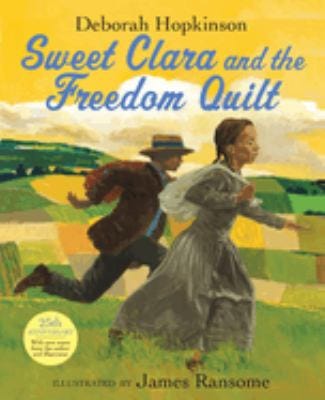
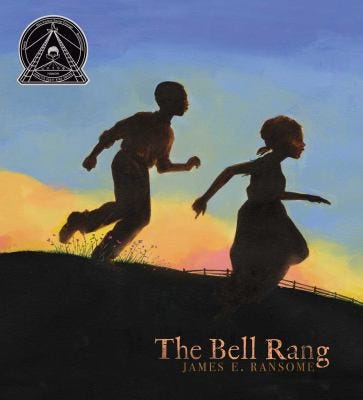
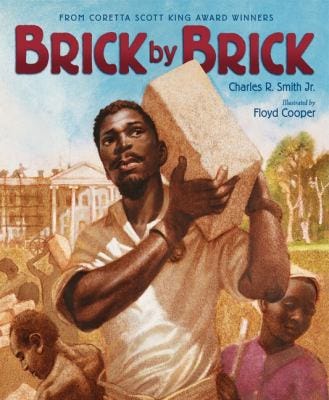
I hope you will consider taking a class day to emerse yourself and your students in the beauty of illustrated texts. Here are just a few you might take a look at care of Vanderbilt University as you plan for the month of February.
Additional References
Olmstead, Kathleen M.; Kalenda, Peter; Rath, Logan T.; Xue, Jeffrey; and Zhang, Jie (2023) “EmpathyThroughout the Curriculum: Using Picture Books to Promote Activism & Equity,”The Language andLiteracy Spectrum: Vol. 33: Iss. 1, Article 4.Available at: https://digitalcommons.buffalostate.edu/lls/vol33/iss1/4
Pitts, B., Pontius-Vandenberg, J., & Guido, D. (2023). A Framework for Using Notable Social Studies Picture Books in High School. June Social Education, 87(3), 142–149. https://www.socialstudies.org/system/files/2023-06/se-8703142.pdf.
Whitford, Alyssa; Lintner, Timothy; and Sheffield, Caroline () “Using Trade Books to Thematically TeachCivil Rights Issues,”The Councilor: A National Journal of the Social Studies: Vol. 88: No. 1, Article 3.Available at: https://thekeep.eiu.edu/the_councilor/vol88/iss1/3
Guo, W. (2024). Fostering student activism: Addressing anti-asian racism through children’s literature in a community-based book club. Journal of Children’s Literature, 50(2), 25-37. Retrieved from https://ezproxy.mtsu.edu/login?url=https://www.proquest.com/scholarly-journals/fostering-student-activism-addressing-anti-asian/docview/3237490152/se-2
Premont, David & Young, Terrell & Wilcox, Brad & Dean, Deborah & Morrison, Timothy. (2017). Picture Books as Mentor Texts for 10th Grade Struggling Writers. Literacy Research and Instruction. 56. 1-21. 10.1080/19388071.2017.1338803.
Sheffield, C., & Clabough, J. (2023, August 28). Disciplinary literacy, Trade Books, and Culturally Responsive Teaching in Middle Grades Social studies. Https://Teachingsocialstudies.org/; NJCSS Journal . https://teachingsocialstudies.org/2023/08/28/disciplinary-literacy-trade-books-and-culturally-responsive-teaching-in-middle-grades-social-studies/
McMackin, M. C. (1998). Using Narrative Picture Books to Build Awareness of Expository Text Structure. Reading Horizons, 39(1), 7–20. ERIC. https://research-ebsco-com.ezproxy.mtsu.edu/c/hydymf/viewer/html/7kmz27s45f?auth-callid=8fa9f5aa-b8c0-4b68-9ef3-204643c04d65